The Faces Behind the Faces: Southeast Asian Beauty Artists Who Are Running Hollywood's Glow-Up Game in Secret
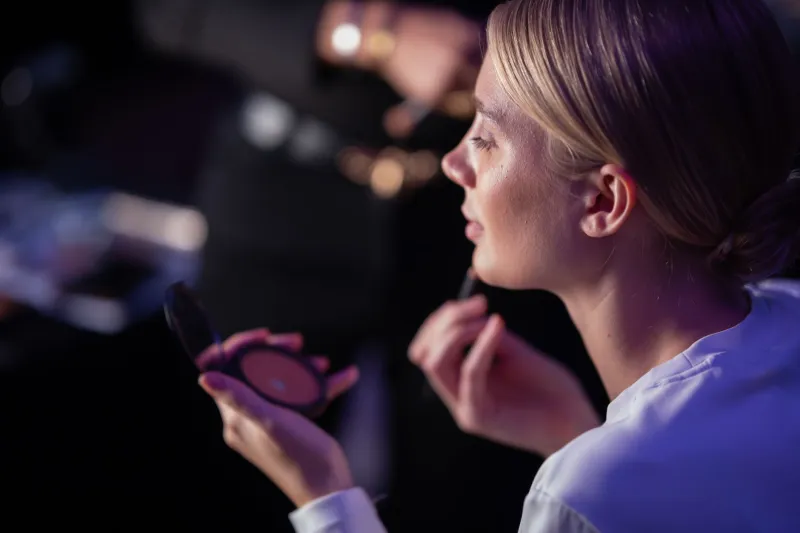
The Credit Never Comes, But the Looks Keep Landing
Scroll through any celebrity's Instagram after a major red carpet event and you'll find the usual flood of tags — the stylist, the designer, the hair team. But look closer at the makeup credit, and you'll often hit a wall. Either it's missing entirely, or it points to a brand deal rather than the actual human being who spent four hours sculpting that face.
That's a problem in general. But it's a specific kind of erasure when the artists doing that work come from Southeast Asia — from the Philippines, Vietnam, Thailand, Indonesia, and Malaysia — and are already operating in an industry that wasn't exactly built with them in mind.
These aren't fringe players. They're working on some of the biggest names in entertainment, developing techniques that end up trickling down into drugstore tutorials, and quietly rewriting what "flawless" looks like on American screens. They just don't always get the byline.
Glass Skin Didn't Come From a Lab in New Jersey
Let's start with the obvious: the "glass skin" trend that took over American beauty culture didn't originate in a Sephora boardroom. It came out of a broader East and Southeast Asian skincare philosophy that treats skin as something you tend to over years, not something you cover up in a rush before a shoot.
Filipino and Vietnamese makeup artists in particular have long worked with a layered, skin-first approach — building luminosity from the inside out rather than stacking on highlighter after highlighter. When that aesthetic started showing up on red carpets in the mid-2010s, American beauty media called it revolutionary. What they didn't always mention was who had been doing it for decades.
Makeup artists like Patrick Tumbokon, who has worked with major music industry names, or the quietly influential Filipino MUA community in Los Angeles that feeds into both editorial and celebrity work — these are people whose aesthetic DNA is in the looks you're saving to your Pinterest boards right now.
The Formulation Game Is Just as Real
It's not just brushes and blending. Southeast Asian influence is baked into the actual products being used on Hollywood's most photographed faces.
Cosmetics formulators and indie brand founders from Vietnam and the Philippines have been pushing the American market toward lighter-weight foundations, serum-skin hybrids, and multi-use tints that perform across a much wider range of skin tones than legacy brands ever bothered to develop. Some of these formulations get picked up by larger houses, rebranded, and sold at a markup — with zero acknowledgment of where the innovation actually came from.
There's also a whole ecosystem of Southeast Asian-owned beauty labs, particularly in the Philippines and Vietnam, that do white-label production for brands you'd recognize immediately. The formula in that celebrity-endorsed serum? Developed somewhere in Metro Manila or Ho Chi Minh City. The name on the bottle? Not even close.
Technique as Cultural Heritage
One of the things that gets lost in the credit conversation is that a lot of what Southeast Asian makeup artists bring to the table isn't just skill — it's a specific cultural inheritance.
The way Thai beauty culture approaches contouring, for instance, emphasizes softness and blending over the sharp, chiseled lines that dominated American editorial work for years. Vietnamese beauty traditions prioritize even skin texture and a kind of understated glow that reads as effortless on camera. Indonesian artists often work with a warmth and richness in color theory that comes directly from the country's textile and ceremonial traditions.
These aren't just stylistic quirks. They're the result of centuries of beauty culture that developed independently of Western standards — and they're making American beauty more interesting, more inclusive, and frankly more wearable for a much wider range of people.
When you see a celebrity showing up to an awards show looking like themselves, but better — not painted, not masked, just genuinely radiant — there's a decent chance that's the result of a Southeast Asian artist's philosophy at work.
The Influencer Pipeline Nobody Talks About
Beyond the professional makeup artist world, there's a whole layer of Southeast Asian beauty influencers — many of them based in the US, many of them first or second generation — who are seeding trends that end up going mainstream with zero attribution.
A Filipino-American beauty creator posts a tutorial on a specific blush placement technique. Six months later, it's everywhere. A Vietnamese-American skincare influencer breaks down a double-cleansing routine that gets screenshot-shared thousands of times. A year after that, a major beauty brand launches a "new" cleansing system using the exact same logic.
The trend laundering is real, and it happens fast. By the time a technique makes it from a Southeast Asian creator's feed to a celebrity's glam team to a magazine cover, the origin story has usually been completely scrubbed.
Why This Keeps Happening — And What's Slowly Changing
The reasons for this kind of erasure are depressingly familiar. A beauty industry that has historically centered whiteness and European aesthetics. A celebrity machine that prioritizes brand partnerships over artist credits. A media ecosystem that's better at packaging trends than tracing them.
But things are shifting, slowly. Southeast Asian beauty creators are building larger platforms and louder audiences. Artists like Hindash (whose Emirati-Southeast Asian influences have earned a global following) are showing that deeply specific cultural aesthetics can scale. Filipino MUAs are using Instagram and TikTok to document their work in ways that make erasure harder. Vietnamese-American beauty entrepreneurs are building brands that explicitly center their heritage.
And American audiences, for their part, are increasingly curious about the origin stories behind the looks they love. The "how'd they do that" question is starting to include "and who actually did that."
Give Them Their Flowers
The next time you're watching an awards show and you think, "okay, whoever did her makeup absolutely understood the assignment" — do a little digging. Look up the glam team. Search the artist's name. Follow their work.
There's a very real chance you'll end up on the page of someone whose grandparents are from Quezon City or Da Nang or Chiang Mai, who grew up with a completely different relationship to beauty than what American culture typically celebrates, and who is quietly making your favorite celebrities look like the best versions of themselves.
They've been doing the work. The least we can do is learn their names.