From Saigon to Your Kitchen: How Vietnamese Coffee Became America's Next Big Obsession
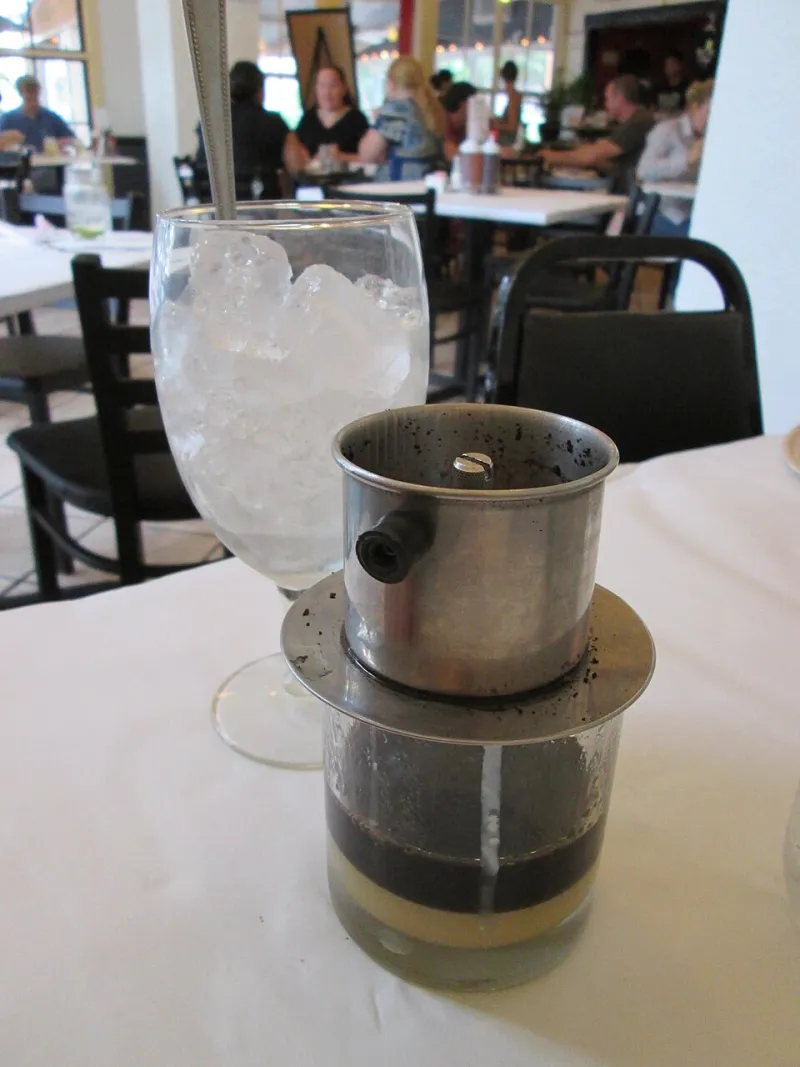
Photo: Infrogmation of New Orleans, CC BY 2.0, via Wikimedia Commons
The Cup That's Quietly Changing American Coffee Culture
Walk into any trendy neighborhood in Los Angeles, Houston, or New York City right now, and you'll probably spot it — a small glass of intensely dark coffee sitting over a pool of sweetened condensed milk, or maybe a frothy, custardy cup that looks more like dessert than your morning pick-me-up. Vietnamese coffee has arrived in America, and it's not just a passing moment. It's a full-on cultural shift.
For decades, Vietnamese coffee culture thrived quietly within tight-knit diaspora communities. Little cafés tucked into strip malls in Little Saigon, Garden Grove, or Midtown Houston served regulars who knew exactly what they wanted. But somewhere between the pandemic-era obsession with specialty brewing and TikTok's relentless appetite for aesthetic food content, Vietnamese coffee broke out of its niche. Now, it's everywhere — and the rest of America is just catching up.
Why Gen Z and Millennials Are Absolutely Hooked
There's a reason younger Americans are gravitating toward Vietnamese coffee, and it goes beyond the flavor (though, trust us, the flavor is a big part of it). For a generation that grew up watching YouTube travel vlogs and scrolling through food content from across the globe, Vietnamese coffee carries serious cultural cachet. It feels authentic in a way that a lot of heavily branded third-wave coffee experiences don't.
Then there's the visual factor. Cà phê trứng — egg coffee — is arguably one of the most photogenic drinks on the planet. Originating in Hanoi in the 1940s when fresh milk was scarce, the drink layers a whipped egg yolk and condensed milk foam over strong black coffee. It's rich, creamy, almost like a tiramisu you drink, and it photographs like a dream. On TikTok alone, #eggcoffee has racked up hundreds of millions of views, with creators from Vietnamese-American communities introducing the drink to audiences who'd never heard of it before.
Beyond egg coffee, the traditional phin filter — a small stainless steel drip device that sits right on top of your cup — has become a symbol of slow, intentional brewing that resonates with a culture increasingly burned out on fast everything. It takes about four minutes to brew. You sit. You watch the coffee drip. It's meditative in a way that punching a button on a pod machine simply isn't.
The Entrepreneurs Disrupting the Scene
Thanh Nguyen opened Café Phin in Brooklyn's Bushwick neighborhood two years ago, and the line on weekend mornings regularly stretches down the block. "I wanted to create a space where Vietnamese coffee wasn't treated like a novelty," she told us. "It has centuries of history and craft behind it. I wanted Americans to experience that the same way they experience Italian espresso — with real respect."
Nguyen sources her robusta beans directly from Đắk Lắk province in Vietnam's Central Highlands, one of the world's largest coffee-producing regions. Robusta, she points out, is the backbone of Vietnamese coffee — it's bolder, earthier, and higher in caffeine than the arabica beans that dominate most American specialty cafés. "People are surprised by the depth of it," she said. "It's not bitter in a bad way. It's complex."
Over in Los Angeles, Kevin Trần runs Drip & Dip, a Vietnamese coffee concept that's become a fixture in the Silver Lake neighborhood. He's been experimenting with modern twists — coconut cold brew, pandan lattes, cà phê sữa đá slushies — while keeping the traditional phin brewing method front and center. "We're not trying to replace what came before," Trần explained. "We're just showing people how wide this world is."
Both entrepreneurs note that major coffee chains have started paying attention. "When Starbucks and Dunkin' start putting condensed milk drinks on their menus, you know something's shifted," Nguyen said with a laugh.
Your Home Brewing Guide: Master the Phin
Ready to try it yourself? Good news — Vietnamese coffee is actually one of the most accessible specialty brewing methods out there. Here's what you need to get started.
What You'll Need:
- A Vietnamese phin filter (available on Amazon or at most Asian grocery stores for under $10)
- Coarsely ground Vietnamese robusta coffee (Trung Nguyên is a widely available brand; Nguyen Coffee Supply is a great US-based option)
- Sweetened condensed milk (Longevity or Eagle Brand both work well)
- Hot water just off the boil (around 200°F)
- A heat-proof glass or cup
Classic Cà Phê Sữa Đá (Iced Milk Coffee):
- Add 2–3 tablespoons of condensed milk to the bottom of your glass.
- Place the phin filter on top of the glass and add 2–3 tablespoons of ground coffee.
- Set the press insert on top of the grounds and gently press down.
- Pour about a tablespoon of hot water over the grounds and let it bloom for 30 seconds.
- Fill the phin chamber with hot water (about 4 oz) and place the lid on top.
- Let it drip — this takes 4 to 6 minutes. Patience is part of the ritual.
- Once the coffee has fully dripped through, stir it into the condensed milk.
- Pour over a glass packed with ice. Enjoy immediately.
Quick Egg Coffee (Cà Phê Trứng):
- Brew a strong phin coffee as above, but skip the condensed milk in the glass.
- In a separate bowl, whisk together 2 egg yolks and 2 tablespoons of sweetened condensed milk until the mixture is pale, thick, and ribbon-like. An electric hand mixer makes this much easier.
- Pour your hot brewed coffee into a small cup.
- Spoon the egg foam generously over the top.
- Sip it slowly, letting the foam melt into the coffee as you drink.
More Than a Trend
What's happening with Vietnamese coffee in America isn't really about trendiness — it's about a culture finally getting the widespread recognition it deserved all along. Vietnamese-Americans have been building these flavors, these rituals, and these businesses for generations. The wider audience is just now showing up to the party.
And honestly? The coffee's worth showing up for.