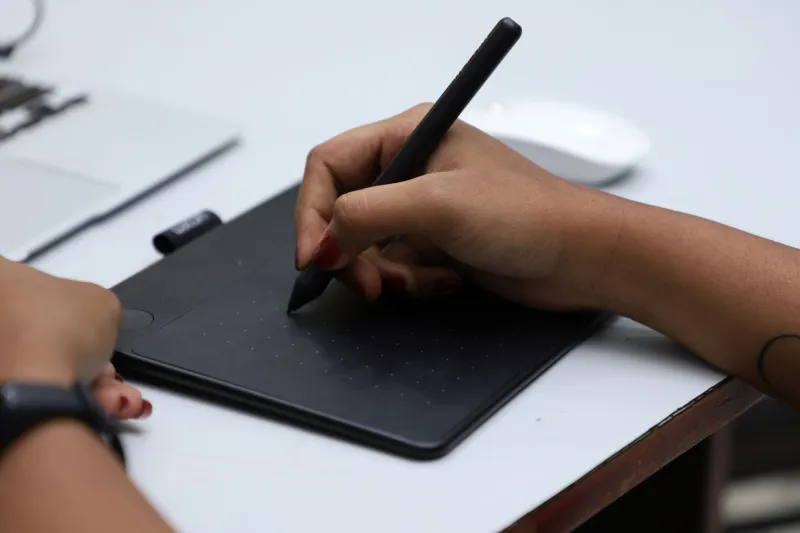
The Invisible Architects: How Designers from Bangkok, Manila, and Saigon Are Building the Worlds You Live In for Hundreds of Hours
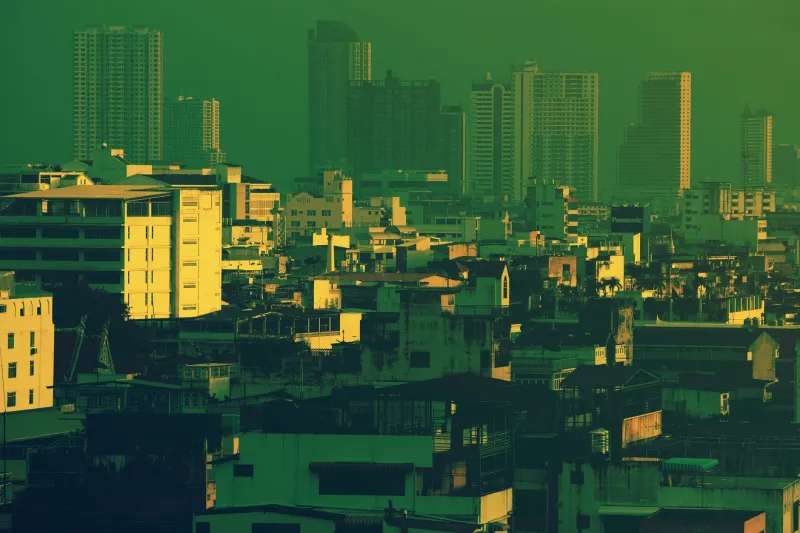
You've probably spent a few hundred hours in a world you couldn't stop thinking about. Maybe it was a crumbling medieval city with moss crawling up every wall. Maybe it was a neon-drenched open world where the rain never quite stopped. Maybe it was a quiet indie game with a handcrafted village that felt more real than any place you've actually visited. You explored every corner of it. You took screenshots. You just... lived there for a while.
Chances are, someone from Bangkok, Manila, or Ho Chi Minh City helped build it.
The Credits Nobody Reads
Game credits roll for a reason. The problem is nobody watches them. Tucked somewhere between the audio engineers and the QA testers are names like environmental concept artist, world-building lead, and art director — roles that are almost entirely responsible for the visual soul of a game. And a growing number of those names belong to designers from Southeast Asia.
Over the past decade, the gaming industry's production pipeline has quietly globalized in ways that go way beyond outsourcing texture work or asset modeling. Studios in the Philippines, Thailand, and Vietnam have evolved from subcontractors into genuine creative partners. The people working inside them aren't just executing someone else's vision — they're originating it.
Studio hubs in Manila have become particularly well-known in game industry circles for producing environmental concept artists who can work across genres — from high-fantasy epics to grounded survival games — with a fluency that's hard to train. Bangkok has a cluster of art directors whose work has touched titles you'd recognize instantly. And Ho Chi Minh City's growing game development scene is punching way above its weight, with indie studios producing world-building work that independent critics have compared favorably to games made with ten times the budget.
What World-Building Actually Means
Here's something most players don't think about: the environment in a game isn't just decoration. It's storytelling infrastructure. Every cracked wall, every overgrown path, every way the light falls through a broken window — those are deliberate decisions made by people who are essentially writing the game's emotional language without using a single word.
Environmental designers work from a combination of concept art, narrative briefs, and their own visual instincts to construct spaces that feel lived in, historically plausible, and emotionally resonant. A fantasy city doesn't just need to look cool. It needs to feel like someone built it, like someone else burned half of it down, and like the people who survived are still figuring out what to do next.
Designers from Southeast Asia bring something specific to that process. Growing up surrounded by architecture that layers colonial history over ancient foundations, in cities where a French-influenced shophouse sits next to a temple that's been standing for five hundred years, gives you an intuitive understanding of how time and culture collide in physical space. That's not something you can learn from a textbook. It shows up in the work.
The Cultural Fingerprint You Can't Quite Name
If you've played a AAA title in the last five years and felt like a particular environment had an almost uncanny sense of texture — like the world had weather history, like the architecture had been through something — there's a decent chance Southeast Asian design sensibility was at work.
Some designers have talked openly about weaving in references from their home regions. The way tropical vegetation grows over and through man-made structures. The specific color palette of late-afternoon light in a humid city. The visual logic of a market street where every available surface gets used. These aren't literal recreations of Southeast Asian places — they're absorbed influences that make fictional worlds feel physically real.
What's interesting is that American and European players often can't identify exactly why a game environment feels different. They just know it does. They describe it as atmospheric, as immersive, as having a quality they can't quite put into words. That unnamed quality is frequently the result of a designer bringing a non-Western visual vocabulary into a Western-dominated medium.
The Anonymity Problem
For all the creative weight these designers carry, the recognition gap is real and honestly kind of frustrating. The game industry has a well-documented habit of centering its public narrative around a small number of Western creative directors — the auteur figures who get the interviews, the GDC talks, the documentary coverage. The people doing foundational world-building work in Manila or Bangkok rarely make it into those conversations.
Part of this is structural. Outsourcing relationships, even when they've evolved into genuine creative partnerships, often come with NDAs or contractual arrangements that prevent designers from publicly claiming credit for specific titles. Part of it is just the way the industry tells its own story — which is something the gaming press has been slow to interrogate.
But awareness is shifting, at least at the edges. Gaming communities on Reddit and Discord have gotten more curious about production pipelines. Some Southeast Asian designers have built significant followings on ArtStation and Instagram by sharing process work — even when they can't name the projects directly. Their audiences get it. The work speaks for itself.
The Indie Scene Is Telling a Different Story
Away from the AAA machine, Southeast Asian indie developers are doing something even more interesting: building worlds that are explicitly rooted in regional culture and mythology, and finding real audiences in the US market for them.
Games drawing on Filipino folklore, Thai ghost traditions, and Vietnamese historical settings have found genuine traction on Steam and itch.io — not as novelty items, but as legitimate favorites among players who are hungry for environments that don't look like every other European-inspired fantasy world. The world-building in these titles is dense, specific, and deeply felt in a way that's hard to fake.
For American players who've grown up on a pretty narrow range of visual references in gaming, these worlds are genuinely revelatory. And for the designers making them, it's a chance to work without the anonymity — to build something and actually put their name on it.
Give Credit Where It's Due
Next time a game world stops you in your tracks — when you find yourself standing at the edge of a cliff just to look at the view, or walking slowly through a ruined city because you want to take in every detail — maybe take a second to think about who built that. Scroll the credits if you can find them. Look up the studio's production partners.
The people who designed the world you're standing in probably live somewhere between Bangkok and Manila. They put something of themselves into those pixels. The least we can do is know they exist.