Your Favorite Animated Show Was Drawn in Manila or Bangkok — Here's the Wild Story Behind That

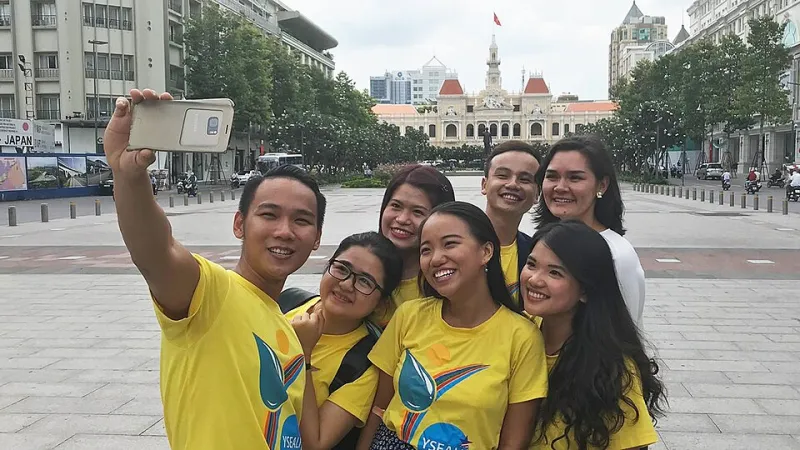
Photo: Roc0ast3r, CC0, via Wikimedia Commons
Pull up almost any animated series streaming right now — doesn't matter if it's a prestige adult drama on Netflix or a feel-good kids' adventure on Disney+ — and somewhere buried in the end credits, if you look hard enough, you'll find a studio name you've probably never heard of. It might be based in Makati. Maybe Chiang Mai. Possibly Ho Chi Minh City. The animation industry has a not-so-secret secret, and it's reshaping what American entertainment actually looks like from the inside out.
Southeast Asian animation studios have quietly become the backbone of some of the most-watched content in America. And almost nobody is talking about it.
How It Started — and Why It Accelerated
This didn't happen overnight. The outsourcing of animation labor to Asia goes back decades, with Japan and South Korea taking the early lead. But over the last ten to fifteen years, studios across the Philippines, Thailand, Vietnam, and Indonesia have leveled up in a serious way. What was once grunt work — filling in backgrounds, handling in-between frames — has evolved into full episode production, character design, and in some cases, complete creative direction on major projects.
The pandemic actually turbocharged this shift. When American studios faced production shutdowns in 2020 and 2021, Southeast Asian outfits — many of which had already built robust remote workflows — stepped in and kept delivery schedules intact. Streaming platforms, desperate to keep content pipelines flowing, noticed. Contracts got bigger. Relationships deepened. And a lot of those relationships never went back to how they were before.
There's also a cost reality that nobody in Hollywood wants to say out loud but everyone understands: producing animation in Southeast Asia is dramatically more affordable than doing it stateside, without any meaningful drop in quality. In fact, the quality argument has flipped entirely.
The Craft Is Undeniable
Anyone who has visited a major animation house in Metro Manila or seen the output coming out of Bangkok-based studios in recent years will tell you the same thing — the level of technical skill is staggering. These aren't shops cutting corners. They're running sophisticated pipelines using the same software as their counterparts in Burbank, staffed by artists who grew up consuming the same global pop culture as American audiences and trained at institutions that take animation seriously as a discipline.
The Philippines in particular has a deep animation tradition that most Americans don't know about. Filipino artists have been contributing to American cartoons since at least the 1970s, often uncredited. Today, studios there are producing full sequences for theatrical releases and leading full seasons of streaming originals. Vietnam's animation sector has seen explosive investment, with several Hanoi and Ho Chi Minh City-based companies earning long-term contracts with major streaming platforms. Thailand brings a distinctive visual sensibility — rooted partly in its rich tradition of visual storytelling through temple murals, shadow puppetry, and graphic arts — that's started influencing the aesthetic direction of certain shows in ways that are subtle but real.
Why American Audiences Have No Idea
Here's where it gets a little uncomfortable. The credits roll fast. Studio branding on streaming platforms is minimal. And there's a deliberate softness around the conversation in Hollywood — nobody wants the headline to be "your prestige cartoon was outsourced." So the story stays quiet, and American audiences keep assuming that everything they watch was born in some sun-drenched studio in Los Angeles.
But there's another layer to this. Southeast Asian studios often work under white-label agreements or as sub-contractors to American production companies, meaning the American brand stays front and center even when the creative and technical labor is happening eight thousand miles away. It's a structure that benefits the platforms and the production companies — and one that the studios in Southeast Asia are increasingly pushing back against.
More and more, Filipino and Thai and Vietnamese animation entrepreneurs are negotiating for co-production credits, original IP rights, and visibility in press materials. They want their names on the poster, not just in the fine print.
Original Stories Are Coming — Whether Hollywood Is Ready or Not
The most exciting development isn't what these studios are doing for American shows. It's what they're starting to do for themselves.
Several Southeast Asian animation studios have launched original projects rooted in regional mythology, local folklore, and contemporary Southeast Asian life — and those projects are finding real audiences globally. A Thai animated short drawing on Buddhist cosmology. A Filipino studio developing a series based on pre-colonial Philippine epic poetry. A Vietnamese production house building an animated universe around the folklore figures that every Vietnamese kid grows up hearing about.
These aren't niche curiosities. They're legitimate creative endeavors backed by serious production budgets and, increasingly, international distribution deals. And for American audiences who've grown up on a diet of European fairy tales and Greek mythology filtered through Disney, there's something genuinely fresh about encountering stories that come from a completely different cultural universe.
The pipeline that Hollywood built to get cheap, quality animation out of Southeast Asia may end up being the same pipeline that carries Southeast Asian stories directly into American living rooms. That's a plot twist even the best screenwriters didn't see coming.
So What Does This Mean for You?
Next time you're three episodes deep into an animated series at midnight, maybe pause on those end credits for a second. The studio that spent months making sure the lighting in that one emotional scene hit just right might be a team of twenty-five artists working out of a converted building in Quezon City. The character whose facial expressions made you genuinely tear up? Those were probably hand-keyed by an animator in Da Nang who's never been to America but absolutely understands what it feels like to miss someone.
That's not a reason to feel weird about loving the show. It's a reason to feel more connected to it. Art doesn't care about geography. But knowing where it comes from — really knowing — changes something about how you see it.
And Southeast Asia has been waiting a long time to be seen.