No Label, No Problem: How Bedroom Producers from Southeast Asia Are Crashing the American Music Scene
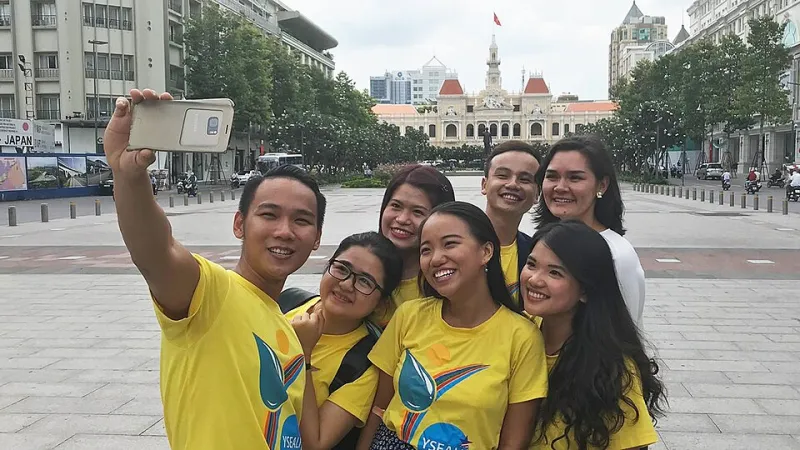
Photo: U.S. Department of State, Public domain, via Wikimedia Commons
Somewhere in Manila, a twenty-three-year-old is recording vocals into a USB microphone at 2 a.m., layering them over a beat she produced on a laptop she bought secondhand. By morning, the clip she posts to TikTok has thirty thousand views. By the following weekend, it has three million. By the end of the month, her Spotify streams have crossed a number that would have taken a mid-tier signed artist years to accumulate — and she still hasn't spoken to a single A&R rep.
This is not a one-off story. This is a pattern.
Southeast Asia's independent music scene is having a moment that's quietly reshaping how the American music industry thinks about global talent — and more importantly, where that talent needs to come from to matter.
The Old Road Nobody Has to Take Anymore
For decades, the path from Southeast Asian musician to American listener was basically impossible without a major label co-signing the journey. You needed distribution infrastructure, marketing budgets, radio relationships, and a physical presence in markets you couldn't afford to live in. The gatekeepers weren't just powerful — they were structurally necessary.
Then the gates kind of just... stopped being gates.
Streaming platforms democratized distribution in ways that are still being fully processed. DistroKid, TuneCore, and similar services let any artist upload their music to Spotify, Apple Music, and Amazon Music for a flat annual fee. No label required. No contract to sign away your masters. No advance to spend years paying back.
TikTok did something different but equally disruptive: it made geographic location almost irrelevant to virality. A clip from Manila has the same algorithmic shot as a clip from Nashville. The platform doesn't care where you're from. It cares whether people watch to the end and share it.
For Southeast Asian artists, who had geography working against them under the old system, this was a genuine leveling of the playing field.
The Artists Leading the Charge
The Filipino music scene — already rich with talent and deeply connected to American pop culture through decades of diaspora influence — has been particularly explosive in this space. Artists like Zack Tabudlo and Moira Dela Torre have built enormous streaming audiences that extend well beyond the Philippines, with significant American listener bases that discovered them organically through algorithmic playlists and social sharing.
But it's not just the Philippines. Indonesian bedroom pop has developed its own devoted following among American indie listeners who found it through Spotify's recommendation engine. Thai artists are building TikTok presences that translate into concert ticket sales in cities like Los Angeles and New York, where Southeast Asian diaspora communities are large enough to fill mid-size venues — and curious non-diaspora listeners are increasingly showing up too.
What's striking about many of these artists is how fluently they operate across multiple cultural registers. They'll sing in Tagalog or Bahasa Indonesia and then drop English verses that hit with the same emotional precision. They're not translating themselves for a Western audience — they're existing in multiple worlds simultaneously, which turns out to be exactly what a globalized listener base responds to.
The Strategy Is the Content
Talk to any of these artists or the managers they've picked up along the way, and a few consistent themes emerge about how they've built their audiences.
Consistency over perfection. The bedroom aesthetic isn't a limitation — it's a brand. American audiences, particularly younger ones, are deeply skeptical of overproduced content. A slightly raw vocal recording filmed in a real bedroom with real lighting feels authentic in a way that a glossy studio video often doesn't. Southeast Asian indie artists have leaned into this hard, and it's working.
Community before commerce. The artists who have broken through aren't treating their early followers like an audience — they're treating them like collaborators. Comment section conversations, response videos, sharing fan covers, asking for input on song titles. It's labor-intensive and it doesn't scale forever, but it builds the kind of loyalty that sustains a career through algorithm changes and platform shifts.
Cross-platform thinking from day one. These artists aren't TikTok artists or YouTube artists. They're everywhere simultaneously, with content calibrated for each platform's specific dynamics. The TikTok clip drives Spotify streams. The Spotify streams drive Instagram followers. The Instagram following sells concert tickets. It's a flywheel, and the artists who understand how to spin it are building real, durable careers.
When the Industry Comes Knocking
Here's the part the old gatekeepers don't love to talk about: the labels are coming to these artists now, not the other way around. When a Filipino singer-songwriter has two hundred million Spotify streams and a sold-out show at a venue in Los Angeles, the conversation is different than it used to be. The artist has leverage. The audience already exists. The label isn't developing a career — they're buying into one.
Some artists are taking those deals, particularly for the tour support and sync licensing connections that labels still do well. Others are staying fully independent, using the threat of label interest to negotiate better terms with distributors and booking agencies. A few are building their own mini-labels and signing other artists from their region, essentially recreating the infrastructure they bypassed — but on their own terms.
What This Tells Us About Everything
The rise of independent Southeast Asian artists in the American market isn't just a music industry story. It's a story about what happens when the structural advantages of proximity and institutional access get disrupted by technology.
For a long time, American cultural dominance in music was partly a function of America's infrastructure advantage — the studios, the labels, the radio stations, the press. That infrastructure still exists and still matters, but it matters less than it did. And in the gap between "matters" and "matters less," a whole generation of artists from Manila and Jakarta and Bangkok have built careers that would have been literally impossible fifteen years ago.
The bedroom in Manila is now connected to the same global audience as the studio in Los Angeles. The artist at the USB mic at 2 a.m. is competing on the same platform as the artist with the six-figure recording budget.
And increasingly, she's winning.