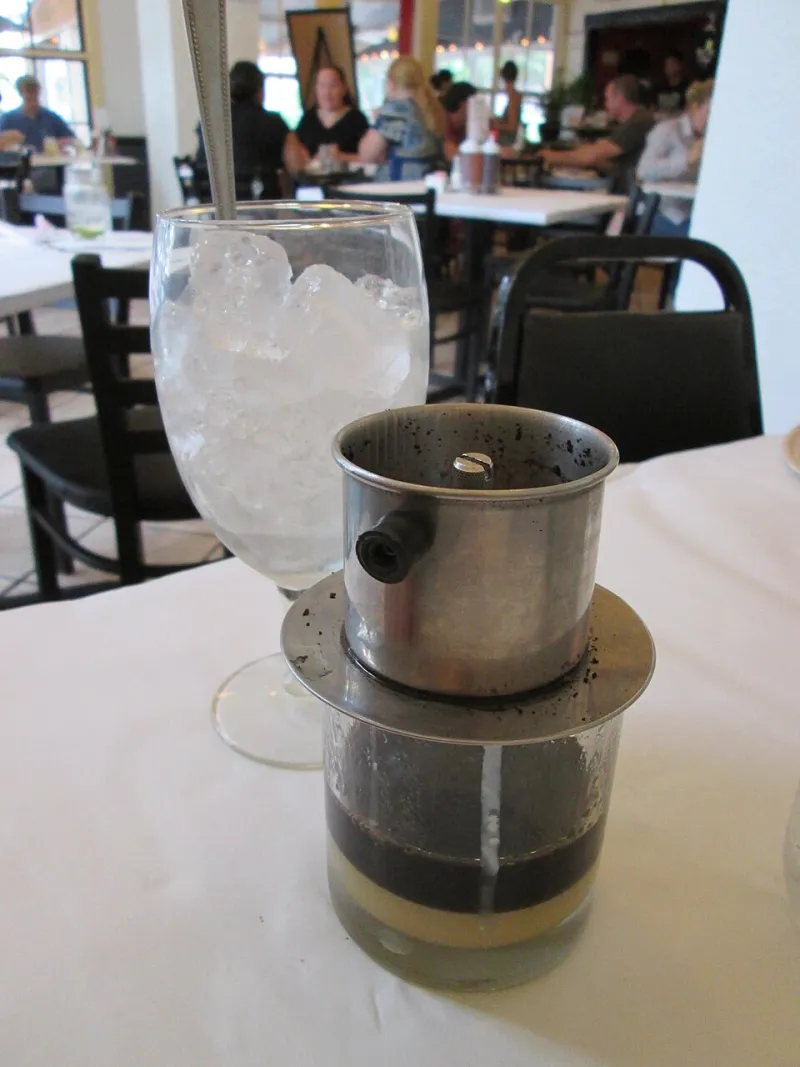
Wok Hei and Borrowed Heat: The Southeast Asian Kitchen Secrets Hiding in Plain Sight at Your Favorite Chains
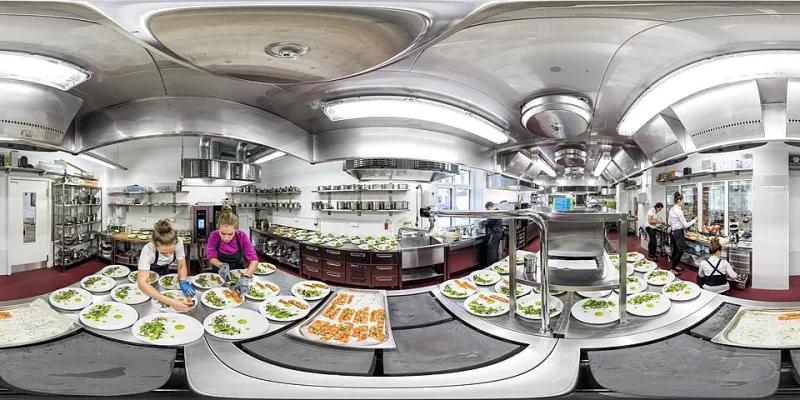
Photo: Lauri Veerde, CC BY-SA 4.0, via Wikimedia Commons
Next time you're in line at one of those trendy fast-casual spots — the kind with the reclaimed wood counters and the "globally inspired" menu — take a second look at what you're actually ordering. That caramelized umami glaze on the grain bowl. The layered chili heat that builds slowly and then hits you all at once. The way the rice has that faint smoky edge even though it came out of an industrial kitchen. None of that happened by accident.
A lot of it traces back to Southeast Asia. And almost none of those menus will tell you that.
The Technique Nobody's Naming
Let's start with wok hei — a Cantonese term that roughly translates to "breath of the wok." It's that almost-burnt, intensely savory flavor you get when proteins and vegetables hit an insanely hot wok surface and char just enough before they steam. Thai street cooks have been doing it for generations. Vietnamese home kitchens do a version of it. Filipino adobo relies on a similar high-heat caramelization principle.
Now go look at the cooking language used by American fast-casual chains. You'll see words like "charred," "flame-kissed," "caramelized over high heat," and "wok-style." That last one is particularly telling — because "wok-style" in an American restaurant context almost always means someone studied the technique, stripped it of its cultural name, and repackaged it as a neutral cooking method.
Chefs who work in regional American kitchens — the kind that supply ingredients and prep guidance to chain locations — have started talking about this more openly. The shorthand in professional kitchens is often something like "Southeast Asian flavor architecture," which refers to the practice of layering aromatics in a specific sequence: alliums first, then lemongrass or galangal, then fish sauce or shrimp paste as the umami backbone, then fresh herbs at the finish. It's a structure that creates depth without heaviness. And it's showing up everywhere from Nashville to Phoenix without a single mention of where it came from.
The Flavor Layering Blueprint
Here's something food scientists have been quietly documenting: the umami-forward, sweet-sour-spicy flavor profile that dominates modern American fast-casual menus is almost a direct lift from Southeast Asian street food logic.
Take the concept of "balance" in Thai cooking — the intentional push and pull between fish sauce saltiness, palm sugar sweetness, lime acidity, and fresh chili heat. That's not just a flavor preference. It's a structural philosophy. Every element serves a counterbalancing function. American chefs trained in French techniques historically built flavor through reduction and fat. The shift toward bright, layered, acid-forward profiles that you see in places like Sweetgreen, Chipotle's newer menu items, and dozens of regional bowl concepts? That's a Southeast Asian influence, even when nobody's saying so.
Food writers and culinary historians who cover Asian-American cuisine have pointed out that this kind of culinary borrowing tends to follow a predictable pattern: a technique or flavor profile becomes trendy in upscale restaurants, gets adapted into fast-casual formats, loses its cultural attribution along the way, and eventually gets described as "modern American cooking." The Southeast Asian original becomes invisible — even as it becomes ubiquitous.
Who's Actually in Those Kitchens
There's another layer to this that doesn't get nearly enough attention: the actual people doing the cooking.
In cities like Houston, Los Angeles, Atlanta, and the Bay Area, a significant portion of the line cooks and prep staff in American chain restaurant kitchens come from Southeast Asian immigrant communities — Filipino, Vietnamese, Thai, Cambodian. They bring their own culinary instincts to the work. They adjust seasoning. They suggest techniques. They show newer cooks shortcuts that come from years of cooking at home or in family restaurants.
That institutional knowledge flows upward — sometimes formally, often not. A kitchen manager picks up a technique from a prep cook. A regional trainer incorporates it into a training manual. Eventually it becomes part of the chain's "signature" approach. The prep cook who started it? Still making hourly wages. Still uncredited.
This isn't a conspiracy. It's just how culinary culture has always moved — messily, without paperwork, and usually with the people at the bottom of the labor hierarchy doing the most creative heavy lifting.
The Media Blind Spot
American food media has gotten better about covering Asian cuisines in recent years. There are more profiles of Vietnamese American chefs, more serious coverage of Filipino food, more willingness to engage with regional Southeast Asian cooking traditions as legitimate and complex. That's real progress.
But there's still a gap between covering Southeast Asian food as a cuisine and recognizing Southeast Asian techniques as foundational influences on mainstream American cooking. The first is about representation — celebrating dishes and chefs from specific communities. The second is about attribution — acknowledging that the cooking methods and flavor philosophies that now define "contemporary American" restaurant culture didn't emerge from nowhere.
Food publications will run a feature on a celebrated Lao American chef and then, in the same issue, describe a chain restaurant's new menu as "inspired by global flavors" without naming a single specific tradition. The connection between those two things — the source and the derivative — rarely gets made explicit.
Why It Matters Beyond Credit
This isn't just about fairness, though fairness is part of it. There's a real economic dimension here.
When Southeast Asian culinary techniques get laundered into "American" cooking without attribution, it makes it harder for actual Southeast Asian restaurants and chefs to compete on their own terms. A fast-casual chain can offer a "globally inspired" bowl for $12 using techniques borrowed from Thai street food, while a family-run Thai restaurant two blocks away charges $14 for the dish those techniques actually come from — and gets treated as the expensive, "ethnic" option.
Attribution isn't just cultural courtesy. It shapes perception, pricing, and who gets economic value out of culinary innovation.
The good news is that more Southeast Asian chefs are claiming space loudly and explicitly — naming their techniques, centering their cultural context, and building audiences who understand what they're eating and where it comes from. That shift is happening in restaurants, on social media, and in a growing body of food writing that refuses to let the source get erased.
Your fast-casual bowl might still be borrowing without asking. But the people it borrowed from are getting harder to ignore.