Seoul Gets the Credit. Bangkok and Manila Do the Work.
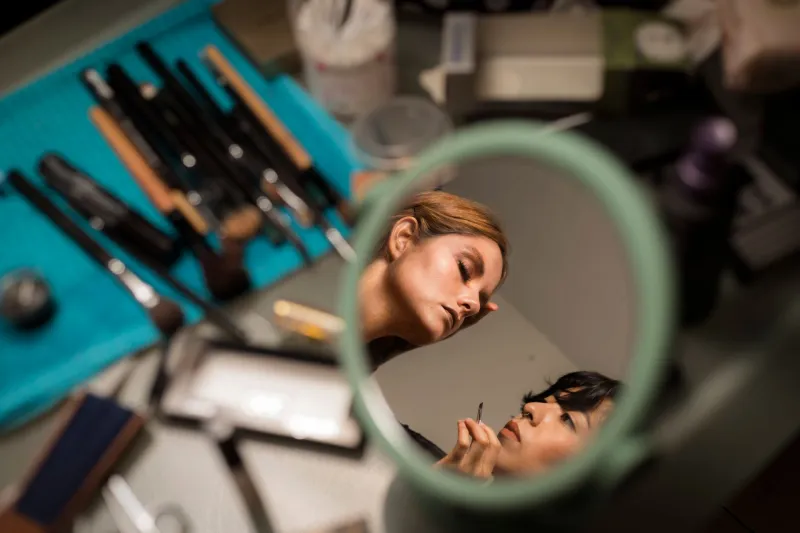
Every few months, a new K-beauty trend detonates across American TikTok. Glass skin. Dolphin skin. The "no-makeup makeup" look that somehow requires fourteen steps and a serum that costs forty-five dollars. Beauty influencers in the US and Korea rack up millions of views explaining these techniques with confident authority. The comment sections fill up fast — omg this changed my life, why did nobody tell me about this sooner, Korean beauty is just on another level.
Here's the thing, though. A lot of the time, that "level" was built somewhere else entirely.
Talk to the right people — makeup artists working out of Bangkok studios, product developers grinding in Ho Chi Minh City labs, trend forecasters bouncing between Manila and Singapore — and a different story emerges. One where Southeast Asian beauty innovators are regularly originating techniques, textures, and aesthetics that travel up through regional networks, get repackaged under a Korean label, and then explode in the West while the original creators remain completely invisible.
The Trend Pipeline Nobody Talks About
The beauty industry has a geography problem — or more accurately, a credit problem. There's a well-worn pipeline that runs from Southeast Asian beauty communities upward to Korean influencers and brands, then outward to the American market. Each stop in that pipeline adds visibility and commercial infrastructure. The original source, more often than not, gets left off the map.
It's not always malicious. Sometimes it's just how trend diffusion works — ideas move fast, attribution gets blurry, and whoever has the biggest platform when something lands gets the credit. But when that pattern repeats consistently enough, and when the people at the bottom of the pipeline are consistently from the same region while the people at the top are consistently from somewhere wealthier and more marketable to Western audiences, it stops feeling like coincidence.
Beauty professionals in Thailand have been particularly vocal about this dynamic — at least within their own communities. Bangkok's makeup scene is genuinely world-class. The city has produced artists who've worked across editorial, film, and luxury retail throughout Asia, and the local approach to skincare-first aesthetics — building looks that emphasize skin quality and luminosity over heavy coverage — was circulating in Thai beauty spaces well before "glass skin" became an English-language search term.
Product Labs in Disguise
Ho Chi Minh City doesn't get nearly enough credit for its role in the actual formulation side of beauty trends. Vietnam has a growing cosmetics manufacturing sector, and a number of the indie brands quietly producing products for both regional and international markets are based in and around the city. Some of those products end up white-labeled and relaunched by Korean or Western brands. Others circulate through regional e-commerce channels and never reach American consumers at all — even when the textures, finishes, or ingredients those products pioneered show up later in products that do.
The snail mucin craze is a useful case study. Yes, Korean brands popularized it in the American market. But snail-based skincare has roots in Southeast Asian traditional beauty practices that predate the K-beauty boom by a significant margin. The journey from local knowledge to global trend involved a lot of stops, a lot of reformulation, and a lot of marketing money — almost none of which flowed back to where the original insight came from.
Manila's Makeup Artists Are Moving First
The Philippines has one of the most vibrant makeup artist communities in Southeast Asia, shaped in part by a long-standing entertainment industry and a beauty culture that's genuinely obsessive in the best way. Filipino MUAs are active across social media, constantly experimenting, and often ahead of the curve on technique.
The "blurred lip" look that's been circulating on American TikTok? Filipino makeup artists were doing versions of that years ago, influenced by a mix of local aesthetics and the overlapping beauty cultures of the region. The gradient lip technique — often credited to Korean tutorials in American media — has roots that stretch across Southeast Asia, where it was being practiced and shared in local communities long before it hit the algorithm in the US.
What Filipino artists frequently lack is the infrastructure to translate their influence into Western visibility. Language barriers play a role. Platform dynamics play a role — TikTok's algorithm doesn't treat all creators equally, and creators posting in Filipino or Thai or Vietnamese are working against structural disadvantages that English-language creators simply don't face. And then there's the straightforward issue of marketability: American audiences have been conditioned by years of K-beauty marketing to associate innovation with Korea specifically, which means the same technique lands differently depending on who's presenting it.
Trend Forecasters Working in the Shadows
Beyond the artists and the formulators, there's a quieter layer of influence: the forecasters. Bangkok and Singapore in particular have developed sophisticated beauty trend forecasting operations, some attached to regional agencies, others operating independently, that track emerging aesthetics across Southeast Asian markets and project where they're headed. Their reports circulate within the industry. Their insights shape product development timelines for brands that consumers in Ohio have never heard of — and brands that they definitely have.
These forecasters are, by definition, invisible. That's partly the nature of the job. But it also means that when a trend they identified six months ago explodes on American TikTok, there's no trail leading back to the meeting room in Bangkok where someone first said this is going to be everywhere.
So What Actually Changes?
Honestly? Probably not the trend cycle itself — that machine is too big and too profitable to slow down over questions of attribution. But something smaller might shift if American beauty consumers started asking a different question when a new "K-beauty" technique hits their feed.
Not is this Korean? but where did this actually start?
The answer is more interesting than the marketing, almost every time. And increasingly, it points south — to studios in Bangkok, to labs in Ho Chi Minh City, to makeup chairs in Manila where someone figured out a technique that would eventually make someone else famous, in a language and a market they've never been introduced to.
That's the beauty industry's open secret. The hands doing the original work are rarely the ones holding the check at the end.